

Jeff
17 de marzo de 2025
A great value "one and done" diagnostic tool for hobbyists
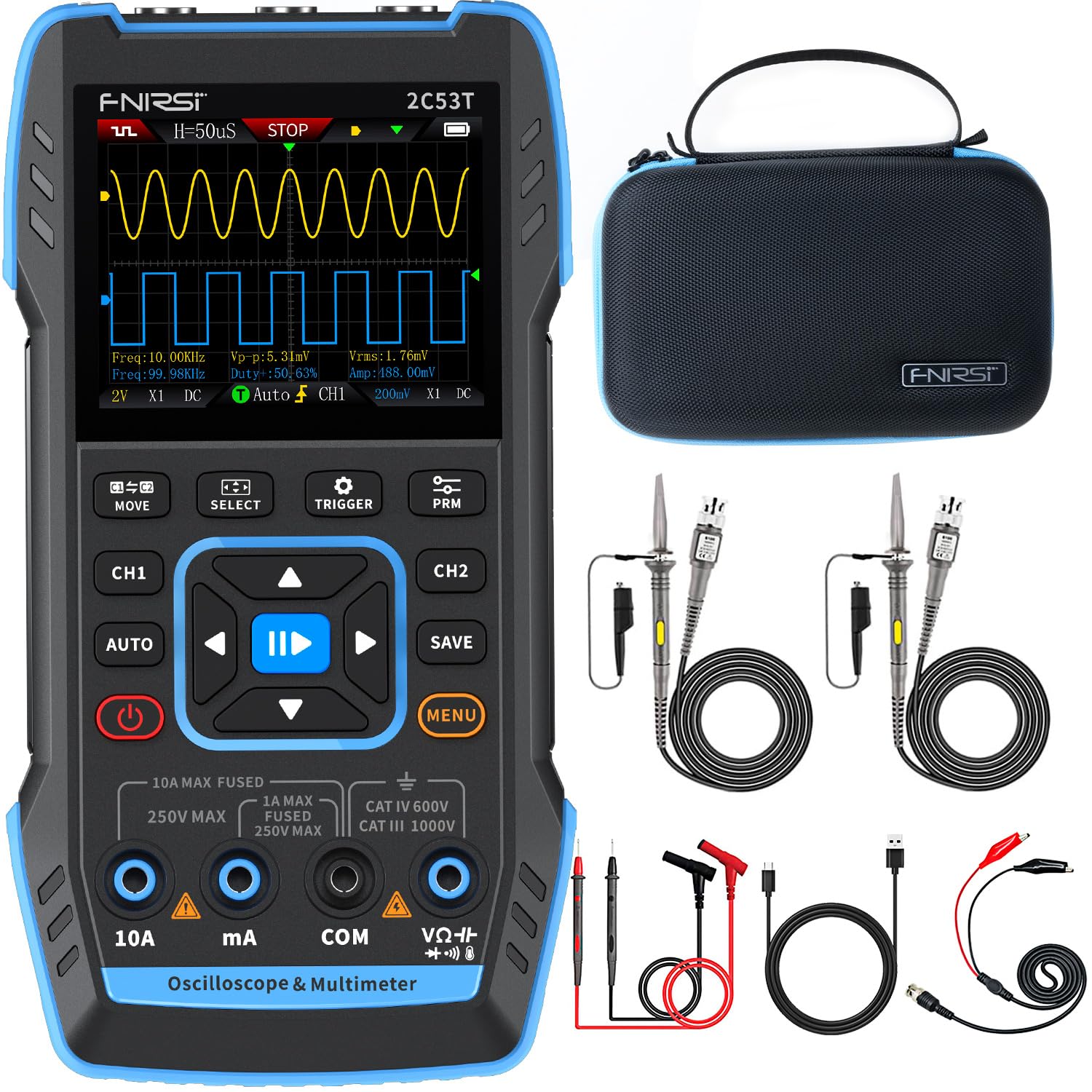
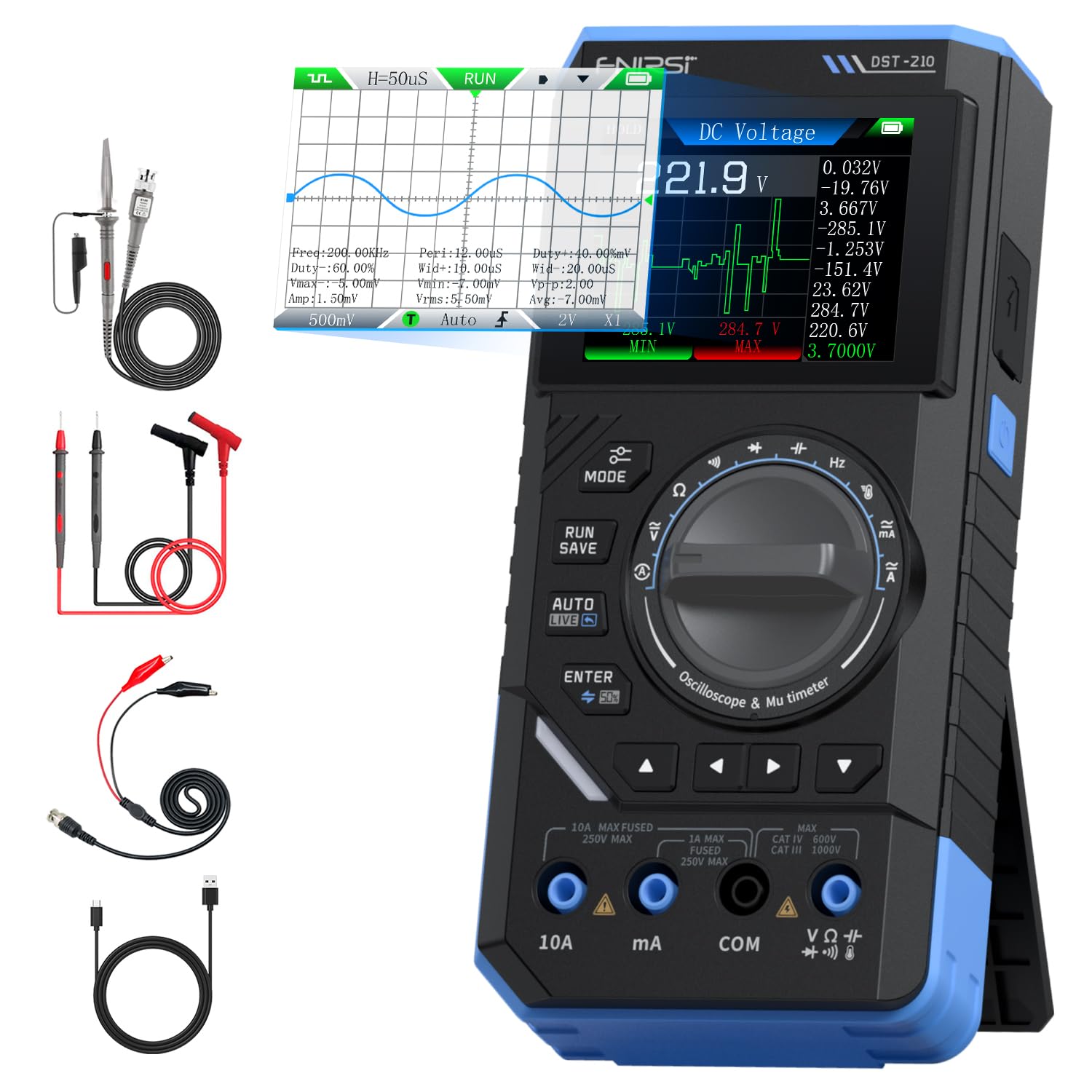
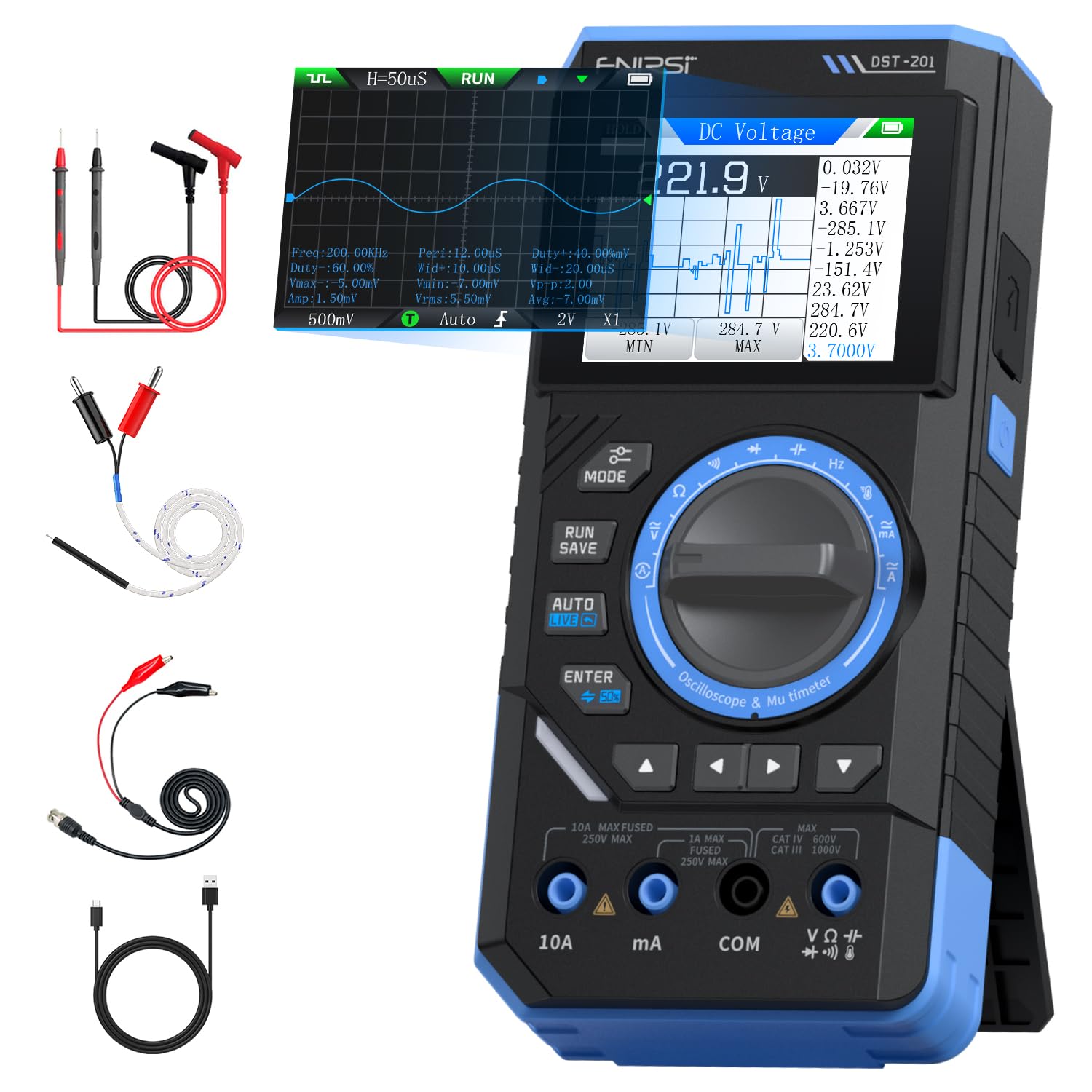
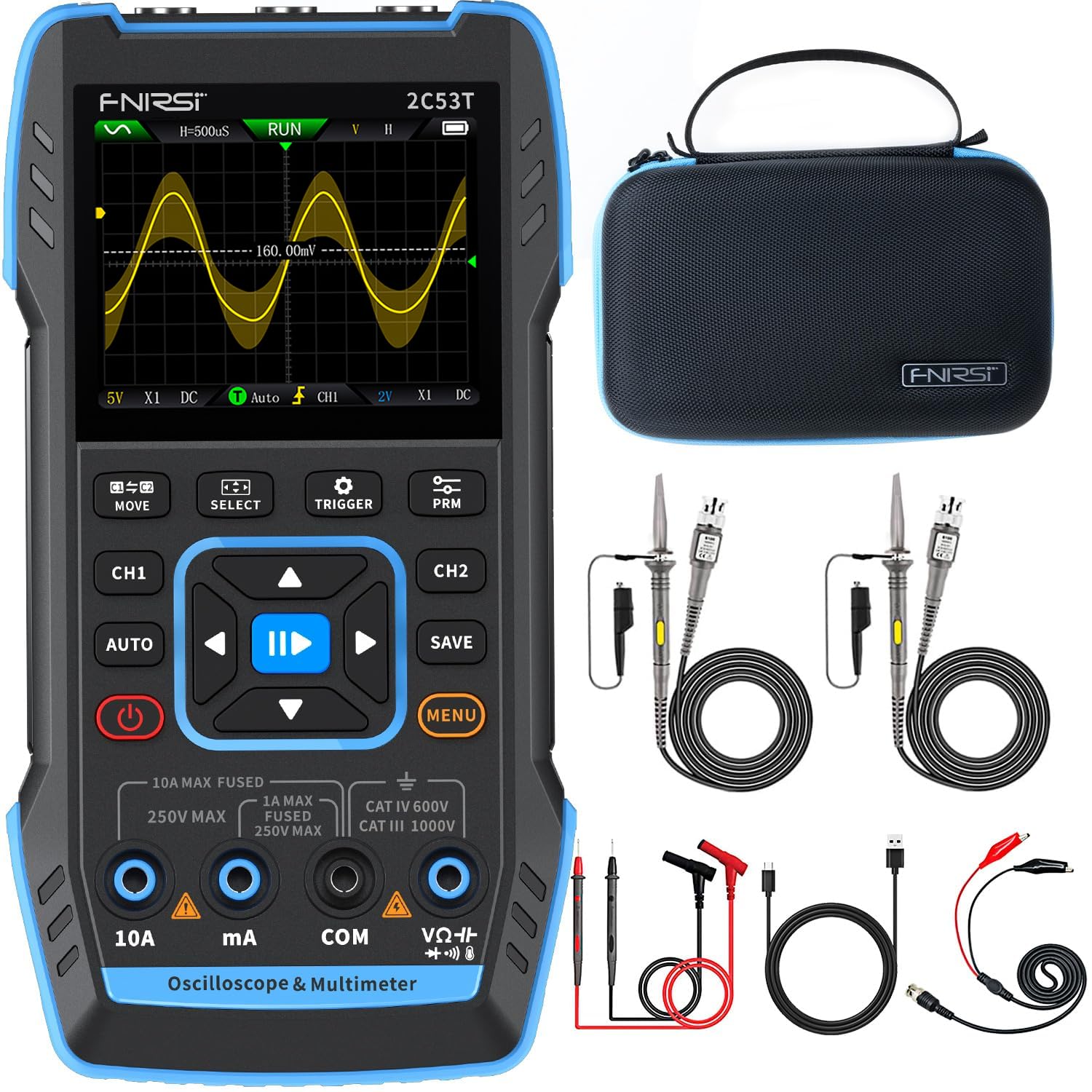
I'll cut to the chase; I love this thing. For a hobbyist, it's about as close as you can probably get to a "one and done" diagnostic tool that takes up basically no space and costs less than a hundred bucks.I've had digital multimeters of various kinds for decades now, but I've never owned an oscilloscope and was in the market for one. (I'll probably still get a full-size model with better specs at some point.) I decided to try this thing out because I was about to start a repair attempt on an old cassette deck, and I knew that the service manual called for testing various things out with a scope. The specs on this device are more than enough to handle any home audio repair, so I figured it'd carry me through that project as well as most others I have planned in the near future.And it's doing great for me; it's actually the perfect device to use for this type of project. Importantly, it has a signal generator in addition to the scope and multimeter functions; without that, it would be a lot less useful. But you can easily inject a sine wave (or various other wave types) into an audio circuit and then measure the output; it can generate the signal while in scope mode. That combined with the multimeter functionality really makes basically any kind of measurement you'd need for an audio repair easy with this one device. It should be similarly useful for testing and repairing vintage computers or gaming equipment as well, though I haven't tried to do that with it yet.I was honestly surprised at the build quality, which is quite good. The plastic feels good quality (it's not the cheap, brittle stuff) and the buttons are rubberized and have a quality feel. The connectors don't feel flimsy, and while I've heard some people complain about connecting the scope leads being difficult, I haven't had any issue with it. I think there may be a little trick to getting them twisted in that just seemed intuitive to me, but maybe isn't to some.I go back and forth on the USB-C rechargeable battery. It's definitely a nice convenience now when the device is new, but I've had my other multimeters for more than a decade and I doubt any rechargeable battery is going to last that long. That could make this something of a disposable product. Still, I think it's probably necessary for this type of device; running a signal generator and oscilloscope with a high polling rate and full color screen would probably eat alkaline batteries for lunch. Then again, you could just use some Eneloops or something... or, how about this, guys... standard replaceable USB-C batteries... kind of seems like an idea whose time has come, right?The one kind of puzzling design choice is that the multimeter inputs are not standard distance from each other, which would make adding attachments that span two or more inputs impossible. Maybe this is intentional, to keep you from trying to use things that are unsupported; who knows. But it seems either kind of dumb on Fnirsi's part (did they not know there's a standard spacing?) or worse, anti-consumer. But I only have one attachment like that for my VC-97 (a transistor tester) and I almost never use it because it's kind of a hassle.As a multimeter, I do think there are a few functions missing that my VC-97 has, but nothing that I use very often. Again, it has everything I need to work on what I'm working on. I can test AC and DC voltages, capacitance, continuity, diode functionality, etc. One thing that's not intuitive - you can press the "move" button on some of the multimeter functions to switch submodes. It's a little bit nonsensical, since you can move through the modes with the directional keys on the bottom of the screen, but some modes have secondary modes that need to be accessed with the "move" key, and these are not clearly marked anywhere. I went through my first few weeks wondering why continuity mode wasn't working at all and why there was no AC voltage function before I realized these were secondary modes accessed that way. I was reaching for my VC-97 whenever I needed to do those things, then suddenly realized one day that the Fnirsi actually does have these modes and they work, and I haven't picked up my VC-97 since.In terms of accuracy, I have checked it against my VC-97 and they always agree to within about half a percent or so (and who knows which is actually closer to "correct").Lastly, the package I bought (and I think it comes two possible ways) came with all the leads I needed as well as a nice carrying case. The scope leads it includes seem pretty good and I doubt I'll need to replace them. The multimeter leads, though, I almost immediately quit using because they're both pretty flimsy (I quickly bent one of the tips) and they don't support using attachments like alligator clips. Get some better leads for the multimeter functions; they're not that expensive.Overall, though, I'm really happy with this thing.Ver másVer menos
11 personas la encontraron útil