

Rick Maxson
The Most Versatile Tool in Your Kit
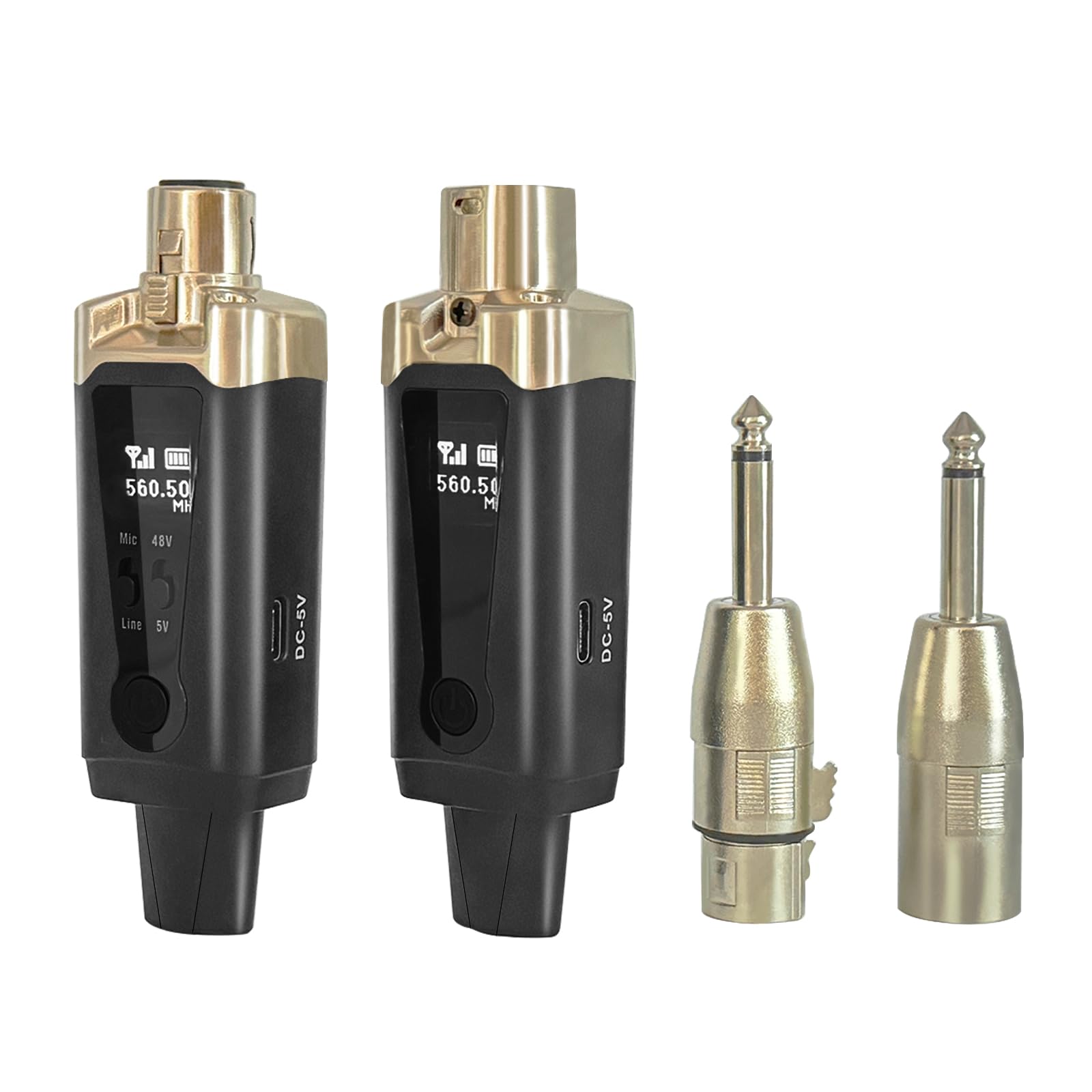
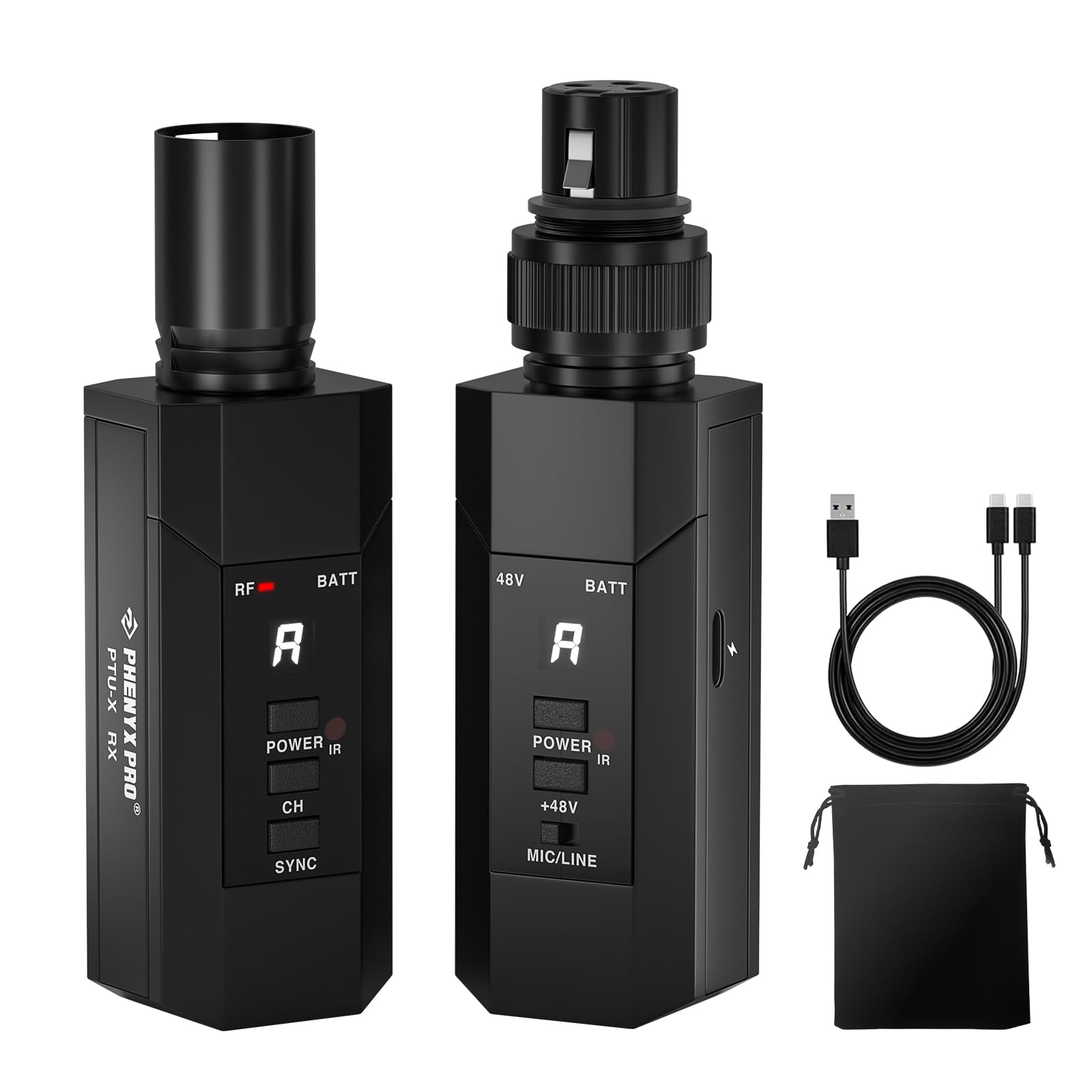
The Phenyx Pro PTU-X provides an economical means to convert any corded XLR microphone into a cordless mic. Moreover, the PTU-X can make any XLR corded device cordless with ease, clarity, and dependability. Here’s my review.The PTU-X has a plastic housing with a black powder coat finish and metal XLR connectors that make for a snug fit. Overall, it feels solid without being too heavy. The PTU-X can scan up to 16 different wireless UHF channels as opposed to the cheap 2.4 Ghz devices that are prone to distortion and dropouts. It has a tested range of 100 feet and a battery life of 7 hours. Out of the box, I was able to get a full charge in half an hour. Both receiver and transmitter are recharged via the USB-C cable (included in the box) and have battery life indicator lights which I really appreciate. Yea! No more changing batteries or guessing about power.The transmitter is fitted with a threaded collar that keeps the device plugged in and secure. At its base there is a mic/line switch allowing the user to choose the best path for a microphone or a line-level device (more about that later). The nice thing is that the switch is slightly recessed, so you must be intentional about changing it. No accidental switching during a performance. Another button allows the user to engage +48V phantom power for those mics or devices that require it with an accompanying light so you can see at-a-glance whether phantom power is on or off. Nice touch.Now for the receiver. This is where you find a unique scanning feature that you won’t find on any other device at this price point (approx. $90). Press the channel/sync button and the device scans your environment for the clearest channel transmission. Press it again and a red RF light indicates that the two devices are ready for pairing. This is done by positioning the receiver and transmitter face to face until both devices display the same channel number in their clearly lit display windows. This is a big deal because you are not just pairing the two devices, the PTU-X is actually locking into the clearest channel for your RF environment and that is awesome!About the mic/line switch. Move the switch to the left and the PTU-X is ready for any XLR microphone whether it is a dynamic mic (e.g. Sure SM58) or, since it has phantom power, a condenser mic like my Audio-Technica AT2053. This is awesome but, for me, this device is so much more versatile because of the line-level option. Move the switch to the right and now most anything that requires XLR connection can be wireless.I have used the PTU-X in public four times. (1) Mixer to speaker on a float in a parade. This eliminated the need for a cable on a crowded float deck where people could trip or pull over my speaker stand or mixer table. (2) At a corporate meeting I used the PTU-X to send a signal from one main speaker to a remote satellite speaker several feet away. (3) I did the same thing later at a Farmers Market so that our sound could be evenly broadcast to a decentralized audience. (4) I plugged the transmitter into my Zoom AC-3 effects pedal and the receiver into a Behringer X-Air 18, effectively eliminating another cable and giving me more freedom. All of these applications were in RF dense environments. In fact, the parade float was moving through miles of crowded streets. No distortion. No cutouts. The PTU-X performed admirably. I haven’t tried the microphone application in public, but I did test it at home with a dynamic and condenser mic with no issues. All of these are initial tests. I can’t speak to how well the PTU-X performs over time. At the time of this writing I have had no issues with PTU-X performance.At this point, you could say that I am a fan of the PTU-X. At the same time, I can imagine some improvements. (1) Ironically, the device’s greatest strength (scanning for the clearest channel) may also be its greatest weakness. Synching the transmitter and receiver can be awkward and tedious. You have to position both units just right before they sync properly. This can take time and patience and can be frustrating if you are rushed to set up for sound check. I have yet to successfully pair the devices on my first try. Once the two devices are paired though, you're good to go. (2) The capsule size of the devices can be limiting if you are working on an already crowded mixer or trying to use more than one PTU-X in a small space. Of course, there are work arounds like connecting the device and mixer with a shorter/narrower XLR patch cable but, still. (3) I think a mute button on the transmitter would be a nice touch. In the end, none of these are deal breakers for me. In fact, I plan to purchase more of these devices because I keep thinking of ways they can be used to simplify my life and declutter performance areas.Oh! I forgot to tell you that, on a whim, I plugged my PTU-X into a corded Behringer IEM system. It was a bit clunky, but it worked like a son-of-a-gun. No drop in volume, clear (in ear) sound, no hiss.Like I said, these things are versatile. If you can imagine it, you can make it cordless with Phenyx Pro PTU-X.Ver másVer menos
5 personas la encontraron útil