


Zero Signal
30 de julio de 2026
Simple, no frills meter for basic work
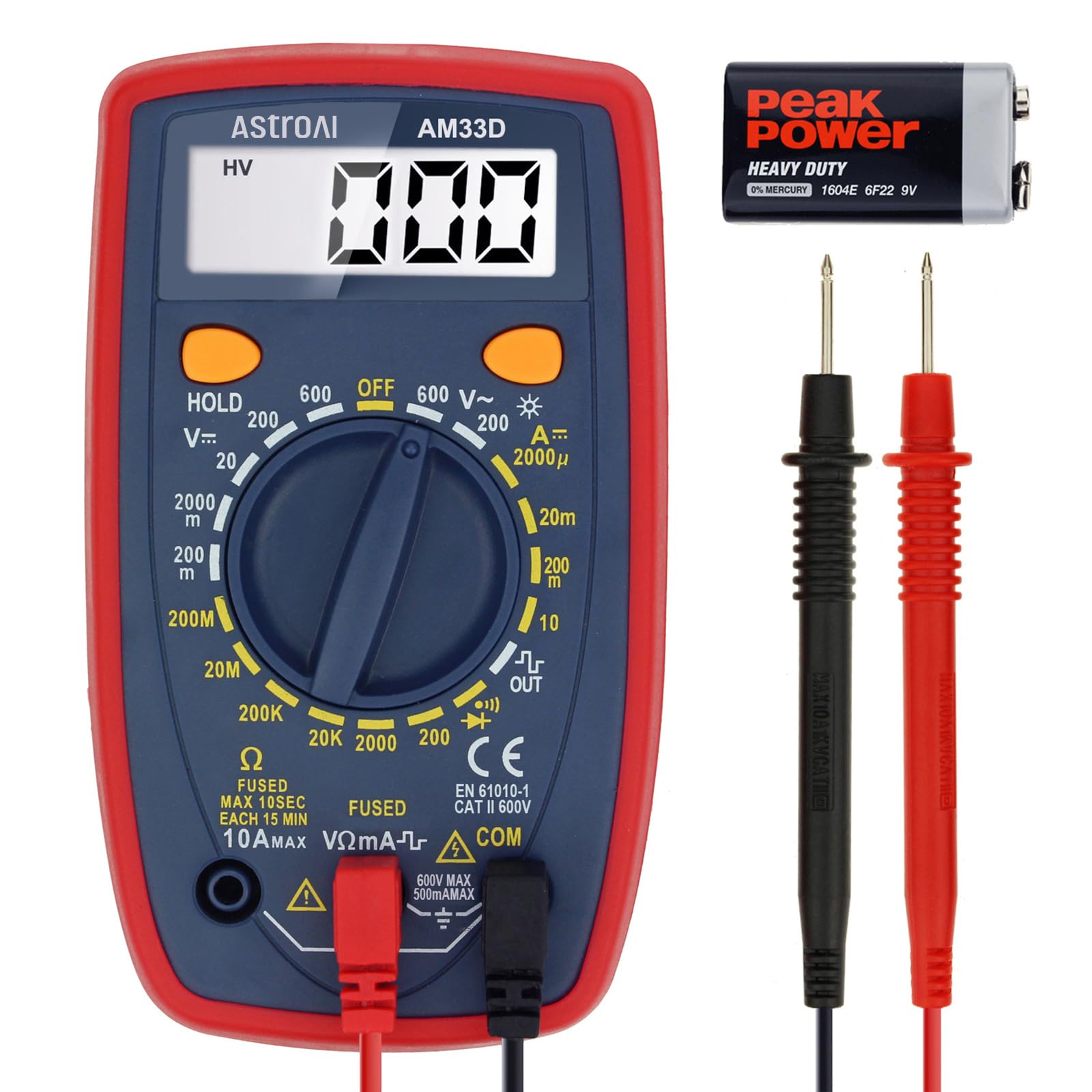
What kind of meter can you get for $10? A pretty good one, as it turns out.I wanted an inexpensive meter to keep at my desk at work, mostly for simple things like checking batteries, etc. Since I was paying out of pocket I wanted something inexpensive that would perform the most basic functions reasonably well.There are a few manufacturers (Aneng, AstroAI, Uni-T) that have a good reputation for making inexpensive meters that will perform basic functions well. I hunted through their offerings and found this meter.This AstroAI had good reviews and was only $10 with battery and a pair of decent-looking test leads. OK, I'm sold.Look, you're not getting a Fluke or Brymen meter for this price. What you ARE getting is a compact, reasonably robust, manual ranging meter that will handle most simple tasks well enough for the average person. Want to check your car battery? Need a continuity reading across a fuse to see if it's blown? Want to check a diode? This meter will do all of that.I'd feel comfortable using this to check line voltage on 120V household circuits, but I'd be leery of anything involving high current. Still, the fuses inside appear to be ceramic, not glass (I peeked). Considering many of the really inexpensive meters have no fuses at all, that's a nice touch.Getting the thing apart is a little tricky the first time. Remove the battery cover (1x Philips screw on the back), then pry the red protective sleeve off the meter. The sleeve fits very tightly into a groove around the face of the meter. To take it off, you lift the edges of the sleeve off the front of the meter and then pry it off the back. The fit of the sleeve is VERY good, which is another nice touch for a meter at this price point. The design team deserves a pat on the back for this.Bad points? Considering the price, there are very few. I really don't like that the meter beeps every time you change functions or ranges. This should be an option that you can turn off because the beeping gets annoying, but for $10 it's hard to complain. It's also hard to find anything else to be particularly upset about. Frankly I'm amazed that you can get a meter of this quality WITH battery and test leads at this price point. I have no idea how they do it.No, I haven't tested the accuracy. A couple of button cell batteries measured close to 3V when I tested them and the meter reads 0.1 ohms when I short the leads together. That's the extent of my testing, and for my use that's probably enough. Maybe someday I'll check it against one of my better meters, just to satisfy my curiosity, but for now I can't be bothered.Do I trust the CAT III 600V safety rating? Not on your life. But for my uses I don't care. The rotary dial clicks solidly into each position, the meter has a backlight you can turn on, the test leads are small but appear to be of reasonable quality, and the whole thing is an impressive engineering exercise when you consider how little it costs. This meter is a grand-slam for casual use around the house or the office.Ver másVer menos
3 personas la encontraron útil