





S. Moore
Compact, Portable, No Wires, Gets Hot!
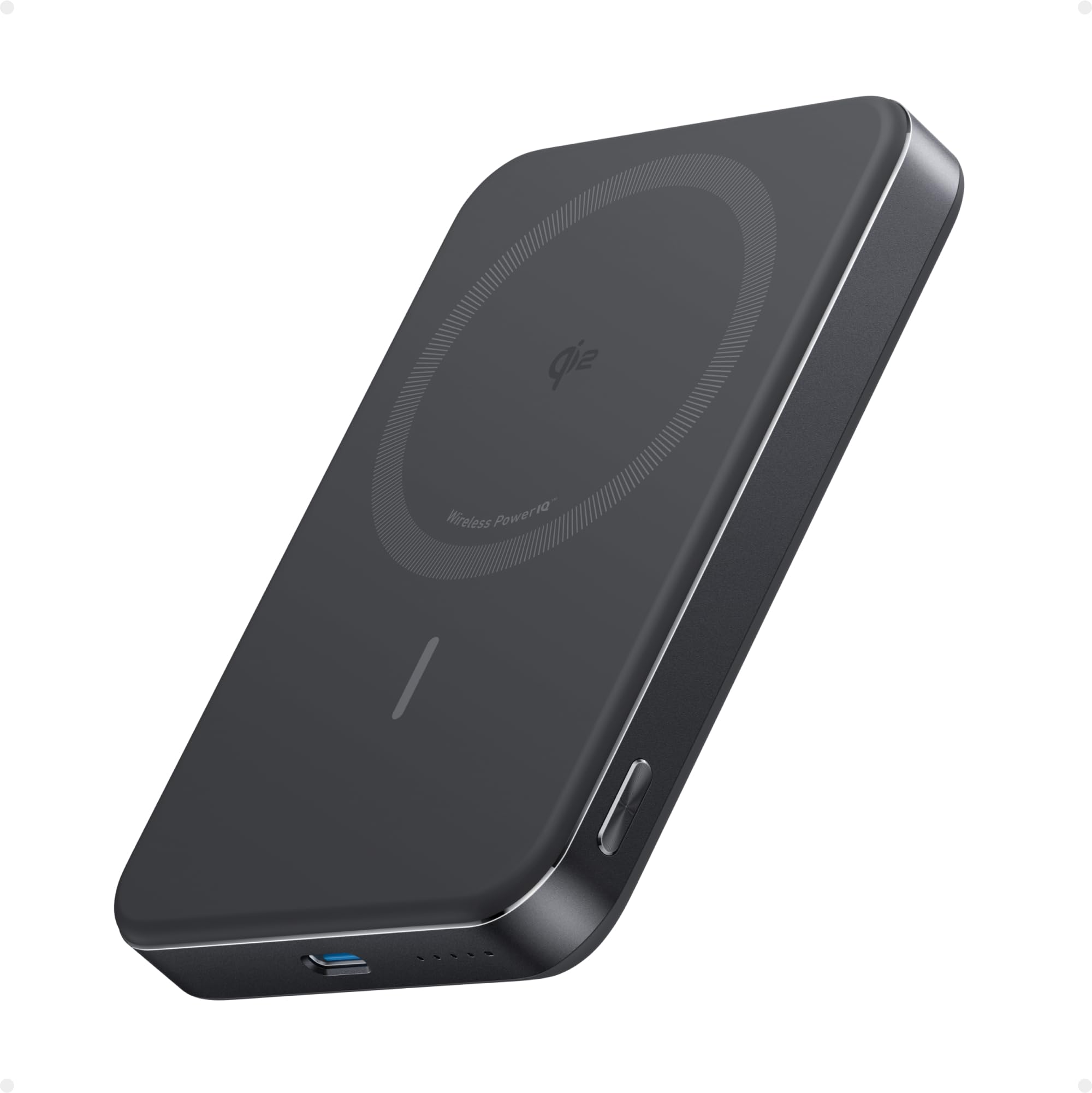
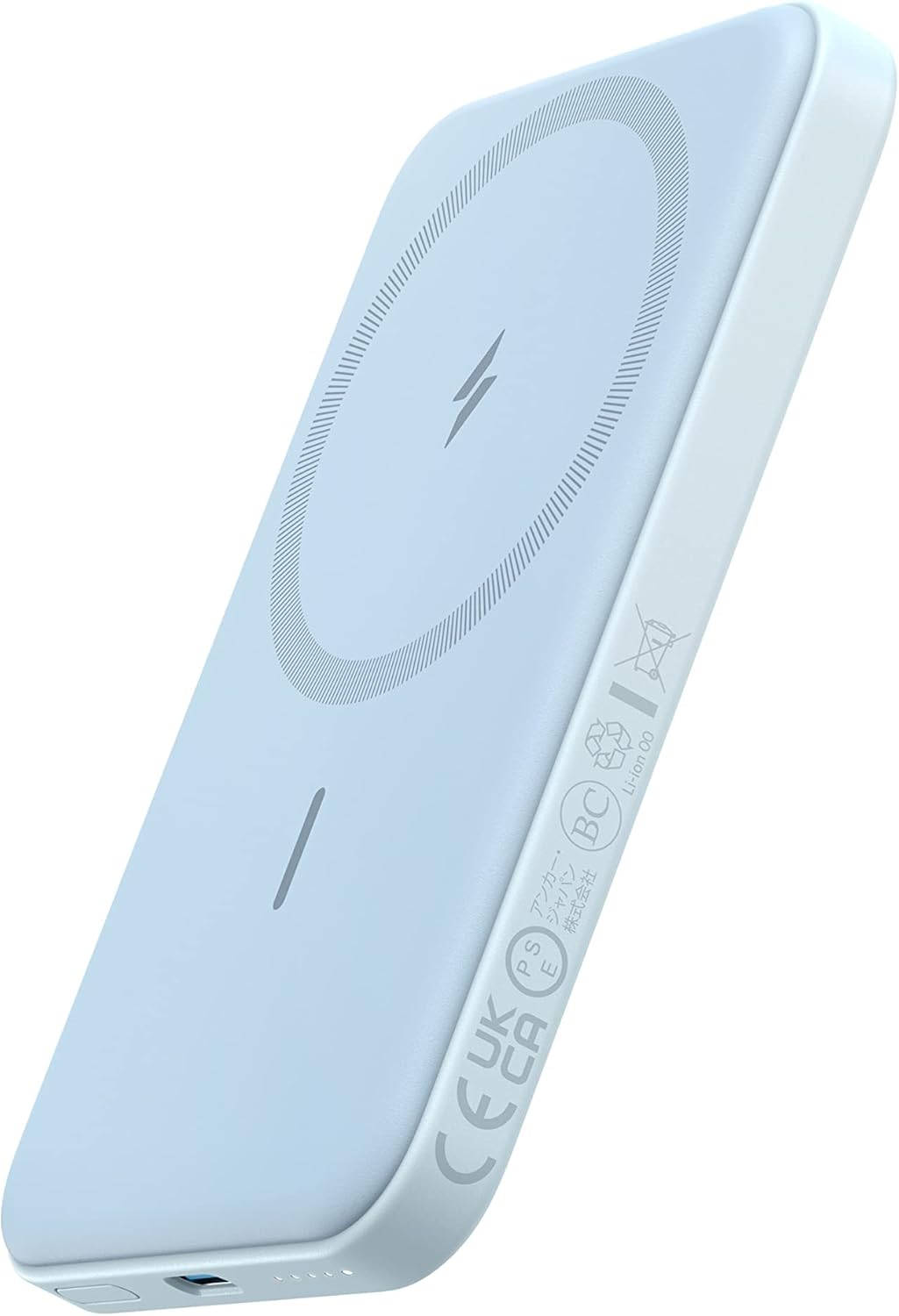
This was my first Magsafe battery. I had some older Qi wireless chargers and was familiar with heating issues. But these were older and lower power. Without the Magsafe feature, they were finicky and fussy and didn't properly fit around camera lens protrusions. I barely used these devices.This Anker 621 has a lot of promise. The Magsafe feature locks tight and the dimensions do not interfere with the camera protrusions, even with a case on the phone. It's compact and slim, and most importantly, does not require wires. It can be easily carried in a backpack or pocket without an accessory bag for wires and cables.When I first unpacked the battery, I fully charged with with a USB-C PD charger. It charged at 1A/5V. I used it to inductively charge my iPhone 14 Pro intermittently over the next few days. After about 10% charge, I determined the heat buildup to be intolerable. Therefore, I only used the pack intermittently. That worked fine for me over several days. When the battery was empty, it took 20Wh to fully charge. The battery was advertised for 5000mAh, which is impossible to measure without disassembling the unit. However, we can calculate 20Wh / 5V / 0.9 = 4400mAh (where 0.9 is the efficiency of the voltage converter for USB). This is below advertised capacity, but there’s a lot of assumptions in the conversion.Then I used a USB-C cable to charge my iPad Mini. It transferred 14.8Wh at about 9 Watts before exhausting. The round-trip efficiency was high, because recharging took 14.8Wh to fully recharge. I suspect I didn’t get the full 20Wh capacity with the iPad because the higher charge demand choked the battery before it could get fully empty.Using the inductive charge mode, both devices get hot relatively quickly. The switching power electronics get particularly hot. I can easily feel where the transistor is located beneath the plastic shell. The inductive transmitter loop gets warm on the battery and the receiver loop gets warm on the phone. Lithium-ion batteries degrade proportionally to temperature (the Arrhenius relationship), accelerating +25% degradation rate for every 10C, this is bad for the phone.In summary,• The battery delivers 20Wh of energy. If using inductive (Qi and Magsafe), much of the energy is converted to heat, so perhaps only 10-15Wh is actually delivered to the battery.• If using high-current devices using a charge cable, such as an iPad, the high current chokes the battery a bit early, stopping at 15Wh.• My back-of-the-envelope calculation shows 4400mAh vs. rated 5000mAh. I suspect the battery is not delivering rated capacity. Anker should be rating these batteries in Joules (watt-hours) instead of Coulombs (ampere-hours).• Inductive charging is inefficient, losing a quarter to half of energy to heat. This is not Anker’s fault but a result of real-world physics. With my iPhone 14 Pro, I saw about 10C rise per 10% of battery charge. I never let it progress beyond this point.• Lithium-ion batteries accelerate aging degradation due to the Arrhenius relationship about +25% per 10C temperature rise. Therefore, prolonged use of inductive charging will ultimately age your battery prematurely.• This battery is very worthwhile because I don’t have to carry an accessory kit with wires to use. Just slap it on the back of the phone and go. Plus, if frees the connector to use with wired headsets when using.Ver másVer menos
333 personas la encontraron útil