

Fairleigh Brooks
10 de octubre de 2020
Casting the Widest Net Into the Human Sea
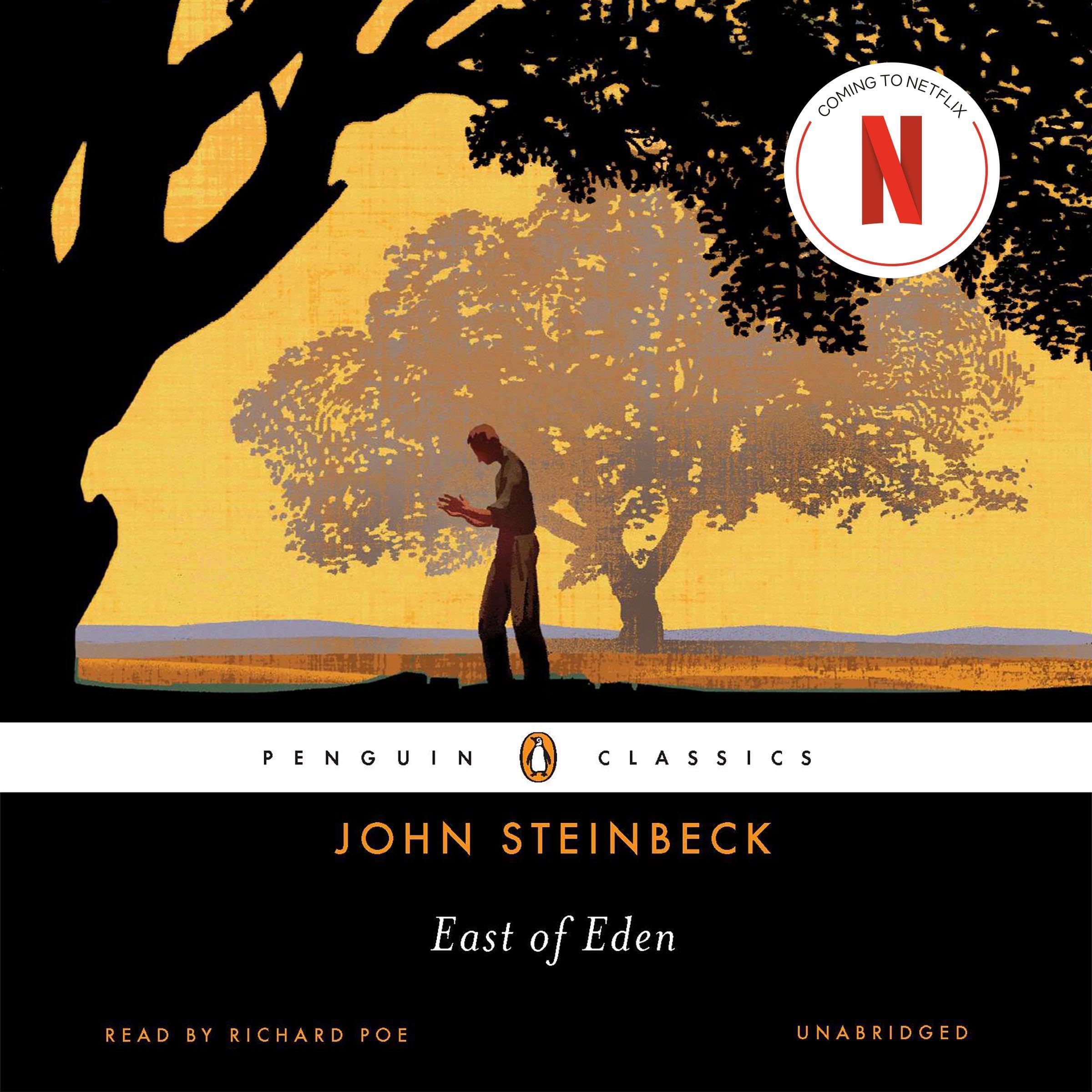
When I’m considering watching a movie I first check the running time. If it’s more than 120 minutes I think twice. Between the screenwriter, the director, and the editor most stories can be told in less than two hours. A significantly longer running time indicates someone who doesn’t know what he or she is doing, or someone in love with his or her own work. There are exceptions, of course, such as biopics or sweeping historic accounts.The same is true for books. Especially in non-fiction many 600-page books could be edited down to 300 pages. But even in fiction the 300-page metric (or so) tends to hold. There are exceptions, of course, such as "East of Eden." I did not mind this book’s 600 pages at all.The first word of the second paragraph tells the reader the story will be told in first person. Along the way that fact needs remembering. "I" as a pronoun, indicating the author, appears just a handful of times. Mostly the narrative seems omniscient. Clearly Steinbeck chose first person as a means to deliver his personal philosophies, present to a notable degree. This deliverance would likely have been awkward in third person.The story tells about the Hamiltons and the Trasks. Adam Trask leaves New England for California. Samuel Hamilton sails from Ireland, only to make his further way clear across the continent. Adam Trask has inherited money, enough to buy a fine ranch. Samuel Hamilton has nothing. His dusty spread, gained by government allotment, is, even in the better years, only marginal.The basic story is simply one of good and evil, but Steinbeck went on for 600 pages because a parable cannot illustrate the fluidity of both good and evil that flows back and forth through human lives. In this fluidity evil inadvertently oozes out of good people and goodness sometimes escapes from an evil life into that very life.Both despite their struggles and because of them, the Hamilton clan possesses a human wealth beyond purchase. Still, illustrating the oozing, Tom Hamilton, son of Samuel, is, genetically, a brooder. His outlook is of his nature, largely unchecked by his nurture, as perhaps it might have been. He never leaves home, which eventually finds a population of one, himself. He is one of those who constantly loses today because he’s always pursuing yesterday – to simply reclaim it, or to hold it static in order to fix the past. When, from outside his own life, yesterday presents itself he destroys it. His destruction is completely inadvertent, and yet a blindness he has that allows the destruction is one of neglect in his nurture.As further example, Cal (Caleb) and Aron Trask (he disliked Aaron) are Adam’s twin sons by a woman who lacks a certain human dimension, which, by that omission, emphasizes her abilities to manipulate and control others, both for her own specific gain and simply because she can. She abandons her sons days after they’re born. Cal wrestles with the omission, which he has inherited to a degree. Eventually his internal give-and-take delivers him to a battered state of understanding. Aron is unclouded by the omission, is a paragon of goodness, and so becomes a victim of unbalance.Steinbeck grew up in Salinas and the Salinas Valley, the setting of the story. His early life mirrors the time of the story. His paternal grandfather did the emigrating from Germany, so there would have been talk of the old country. He was a war correspondent for the Herald Tribune and worked with the OSS. From his experiences we can infer his acknowledgement of the ability in America to throw off ancient ways, also acknowledging that the farther west one travelled the more one could outpace the tentacles of Puritanism that continued to exist in the East. The cliché and reality of California, which continues today, was an even more utterly contrasted state two centuries back, and even one century back.So, I read the last fifty pages of "East of Eden" in the leafy parking lot of a suburban library branch. The building is new and modern, in a well done mid-century way, leaving me to wonder how the plans ever survived the city council, in these days of varying degrees of neoclassicism. It is attached to what was originally a three-story grade school from the early 1940s that is now the city hall and police HQ of this suburban town. Around in all directions are Cape Cod-y homes, both pre- and immediately post-war. These houses are attractive, well proportioned and well built— somewhat humble contrasts to the Barbie castles. Many are barely larger than the master bedroom suites in those ostentatious, multi-gabled clown shows, and yet were coveted by returning G.I.s eager to find normality again.Early fall is at hand right now, with enough leaves on the ground and beginning colors in canopies to confirm the season. Hurricane Delta made landfall yesterday evening on the Louisiana coast. The system has already moved up the Mississippi Valley and will soon turn into the Ohio Valley to deliver a fair amount of rain tomorrow, and so today, a Saturday, has increasingly become overcast.I point out the day of the week, and the season, because it’s the sort of day I lived for as a kid – open ended, unstructured, free, with a certain contemplation implicit to cooler weather and indirect sunlight. As my wife says, the geography of childhood. And, hell, I still live for these days, days extraordinary simply because they are so ordinary, which is to say "Jesus! I’m a sentient being walking around on the surface of a planet!"And that’s what Steinbeck was after in "East of Eden," and that is just what he achieved—basically a Cheever short story x 500. Steinbeck needed six hundred pages to establish for the reader the pace and canter of daily life – i.e., life – in this California valley, and in one of its small towns. He needed that many words to let us into the life and minds and dreams and nightmares of a dozen or so human beings. That many words to expose the tumult behind the face of conformity, a template that makes it easier for you and me to connect on a same frequency.A hallmark of great writing is an implicit prescience, a story as true today as it was during the time of its creation. "East of Eden" was published in 1952, so we can assume Steinbeck was writing the story in the post-war years of the late 1940s and very early 1950s. In the story evil wins when the truly good are ambivalent, unwilling to spend time and effort to stand up to, or even acknowledge, the calculations of connivers. There could hardly be a better description of our present time.Ver másVer menos
109 personas la encontraron útil