

Scott M. Quinn
19 de julio de 2015
A Must-have Book for Anyone interested in Franco
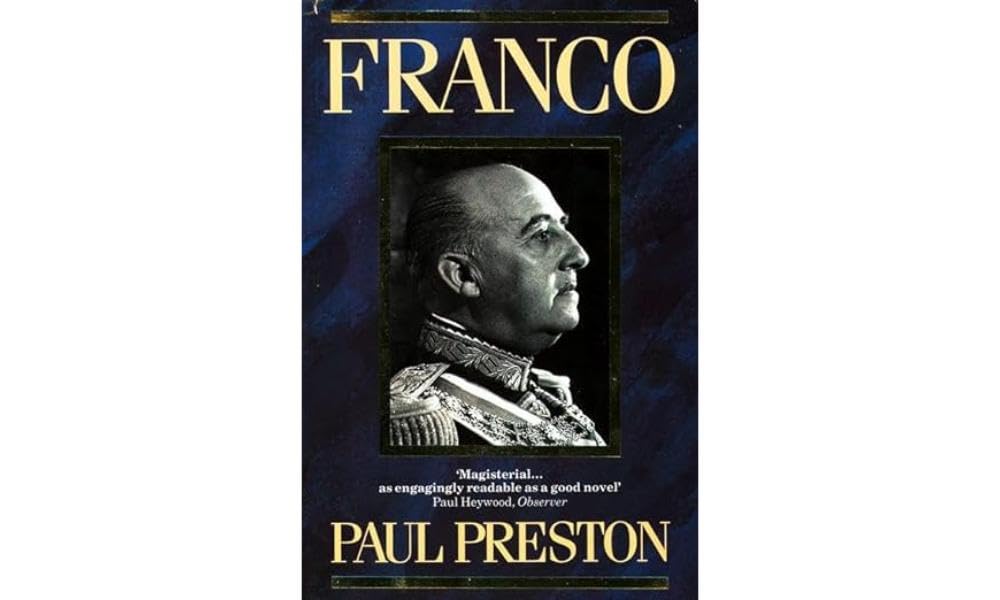
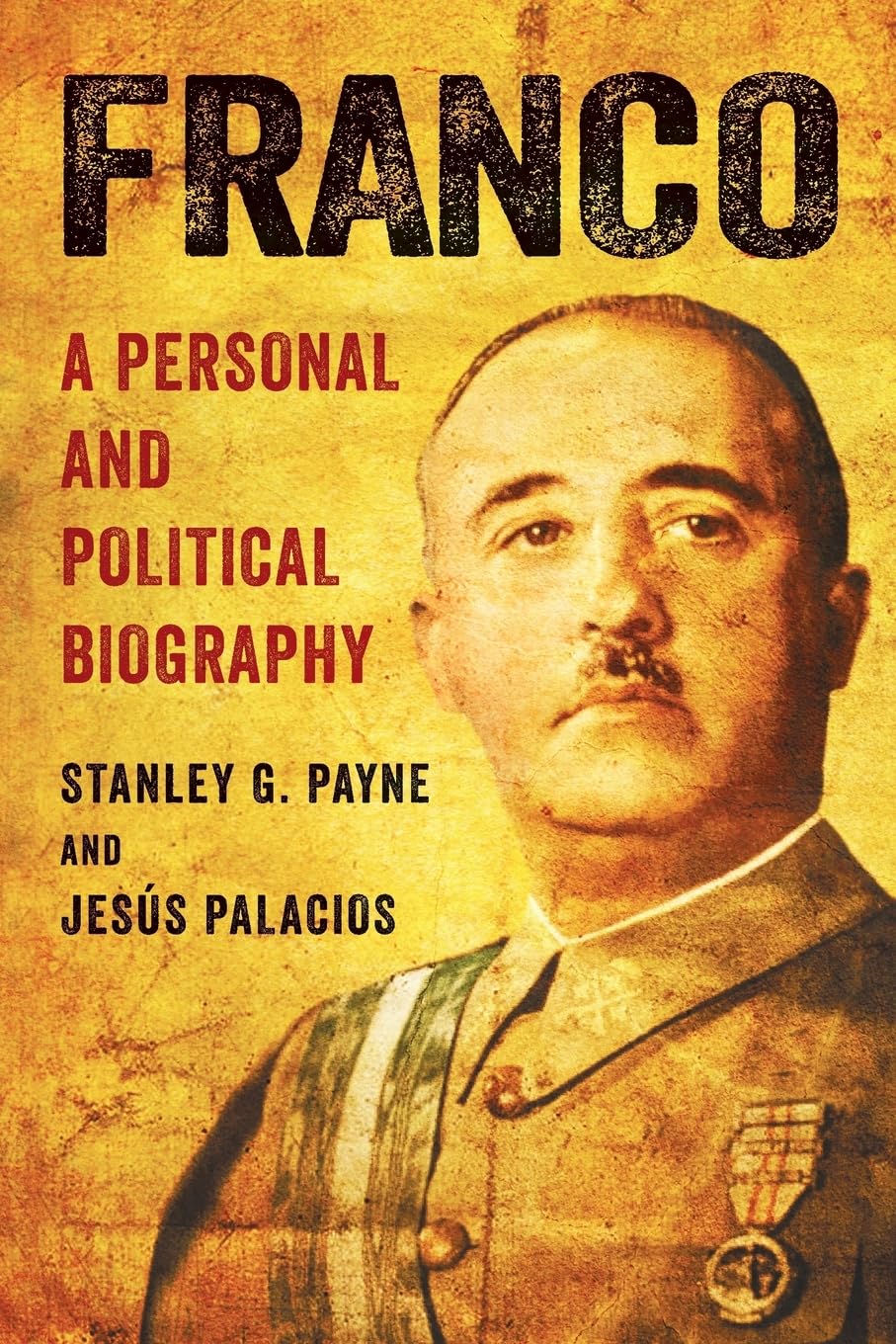
In reviewing this book, co-written by Stanley Payne and Jesús Palacios, I will attempt to answer two basic questions that I think most people want the answers to: 1) should a student of the history of Spain in the 20th century read this book and place it in his library? And 2) why or why not?The answer to the first question is a resounding yes! Franco marks the culmination of the brilliant career of Stanley Payne, the dean of English speaking historians of modern Spain. This is an indispensable work.Now, why?Firstly, because it needed doing. Paul Preston, in his ponderous, tedious, and ill-mannered biography of Franco, simply did not get the job done. Writing about Franco in a way that adds something useful to the conversation about him requires hard work, patience, and thoughtful analysis, the sort of qualities all great scholars have. It says something that Preston's bloated and crammed work merits a mere single mention in Payne’s notes, and a courtesy one at that (chapter 3, note 10).Before I continue, I think it important to point out that Payne, at least in his English-language books, is the sole author. We will have to take Palacios at his word (i.e., his name as co-author) that he agrees with Payne's conclusions. Still, I will refer to Payne only, as this work represents several decades of thought, reflection, and analysis on Franco. No disrespect is intended toward Palacios.Secondly, the sources marshaled include personal interviews Payne conducted in 1958 and 1959, as well as interviews with Franco's daughter in 2008. And this is one of the key elements of this book. Franco was a very private, stoic man, and Payne's interviews provide real, even raw, insight into Franco the man. Moreover, most of the sources are Spanish-language ones, which, although an impediment to someone like me who failed to apply himself adequately in his studies of Spanish, nonetheless get to the heart of the source material that matters.Thirdly, Payne's balanced narrative places Franco in perspective. No one is one-dimensional, but you wouldn’t know it from most accounts of Franco’s life, which offer a mere caricature of him. Franco is certainly an enigma for most people, and Payne has provided us a better understanding of this complex man. At the same time, this is not a hagiography. Still, there is something remarkable about Franco’s unduring sang-froid in the face of major events that threatened his life, his reputation, and his status as leader.Fourthly, Payne's most enduring achievement is in placing the character of the Franco regime in the proper contexts. Payne examines Franco from within the whirlwind that defined his career: from his beginnings as an infantry man in Toledo and, later, Morocco, to his later roles as general within (and defender of) the Republic, to his decision to rebel against it, and then to his decades as caudillo with all of its twists and turns at home and abroad.Fifthly, building upon the preceding paragraph, Payne points out some key points that must be raised in any discussion of the SCW. Franco was in no way a fascist in the conventional sense in the 1930s. Franco was not some blood-thirsty dictator intent on killing anyone who fought against the victorious side. Indeed, his regime's "repression" was meek and diminished with each year following 1939. Compared with other regimes faced with similar conflicts (democratic, Communist, conservative), Franco's "repression" was mild by comparison.Sixthly, Payne does an excellent job explaining how the very thing that brought Spain into the modern world also led to the undoing of the conservative society he sought to maintain. Tourism, which brought needed hard currency to Spain after the SCW also led to the encroachment of liberal Western "values." The implosion of the Catholic Church following the disastrous Second Vatican Council, which concluded in 1965, undermined the very vision of society and Church Franco fought to restore. On his deathbed, Franco seemed to sense that change was in the air. One hopes that he never imagined the betrayal of Juan Carlos, the man in whom he had placed so much trust as future king of Spain, and whose multiple promises to adhere to the basic laws of the Franco regime were later revealed as lies.Seventhly, Payne reiterates his previous observations (which stand as a sorely needed corrective to leftist lies) that the Left had given up on democracy almost as soon as the Republic was established; that the Left in no way governed responsibly to respect the wishes of at least half of Spain; that the Left engaged in violent means to assert or protect its political power: indeed, the Left committed the only murder in the history of Western democracies of the leader of the opposition, Calvo Sotelo; and had Franco never been born, the insurgency would have nonetheless occurred. Far from instigating the rebellion against the Republic, Franco was essentially dismissed by the Right in the final weeks leading to the revolt due to his failure to commit. The murder of Calvo pushed him to join the revolt.Eighthly, Payne is brilliant in pointing out the lie of the century, namely, Guernica. Not only was Guernica a legitimate target (a finding endorsed by the UN!), Payne presents other bombing atrocities by the Left that somehow never find their way in other books.Despite having written an excellent book called Spanish Catholicism, in which he showed a real understanding of Catholicism and its role in Spain's history and culture, Payne is too critical of the Church’s response to the civil war, in my opinion. It does not seem like a failure to me that the Church should side with Franco, who was saving priests and religious from slaughter by the Left. (To be fair, he does point out in earlier works that the slaughter of priests by the Left was the worst since Roman times, even worse than the French Revolution.)Each of Payne’s books has a similar logic in terms of how they are structured. Titles of chapters capture the essence of the narrative within. His writing is clear and calm and easy to follow, with no words wasted. Each chapter ends with a pithy summary. Notes frequently contain additional information beyond citing the source.I recommend this book for anyone who is interested in Franco. The beginner will get a broad overview and the veteran student will appreciate the scholarship and wisdom from a giant in his field.Get this book.Ver másVer menos
84 personas la encontraron útil